

Stop Getting Ignored at Work! 6 Effective Workplace Communication Strategies That Actually Work

Discover Effective workplace communication strategies that will mind-blow your team’s productivity. Learn proven methods to transform your office dynamics.
Introduction
Good communication can make or break any workplace. Whether you’re leading a team, working with colleagues, or presenting to clients, effective workplace communication strategies are essential for success. Poor communication in the workplace leads to missed deadlines, frustrated employees, and lost opportunities. The good news? You can learn proven communication strategies in the workplace that will transform how your team works together and boost productivity across your entire organization.
Why Communication in the Workplace Matters More Than Ever
Today’s workplace looks completely different from what it was just a few years ago. With remote work, hybrid teams, and global collaboration becoming the norm, strong communication skills aren’t just nice to have – they’re absolutely critical.
Research shows that companies with effective communication are 3.5 times more likely to outperform their competitors. When team members can share ideas clearly, understand expectations, and collaborate smoothly, everything else falls into place.
Key benefits of strong workplace communication include:
- Increased productivity and efficiency.
- Better employee engagement and job satisfaction.
- Reduced conflicts and misunderstandings.
- Improved customer relationships.
- Faster problem-solving and decision-making.
- Higher employee retention rates.
Think about your own experience. How many times have you felt frustrated because someone didn’t explain something clearly? Or missed an important deadline because of mixed messages? These situations happen in every workplace, but they’re completely preventable with the right approach.
The Hidden Costs of Poor Communication
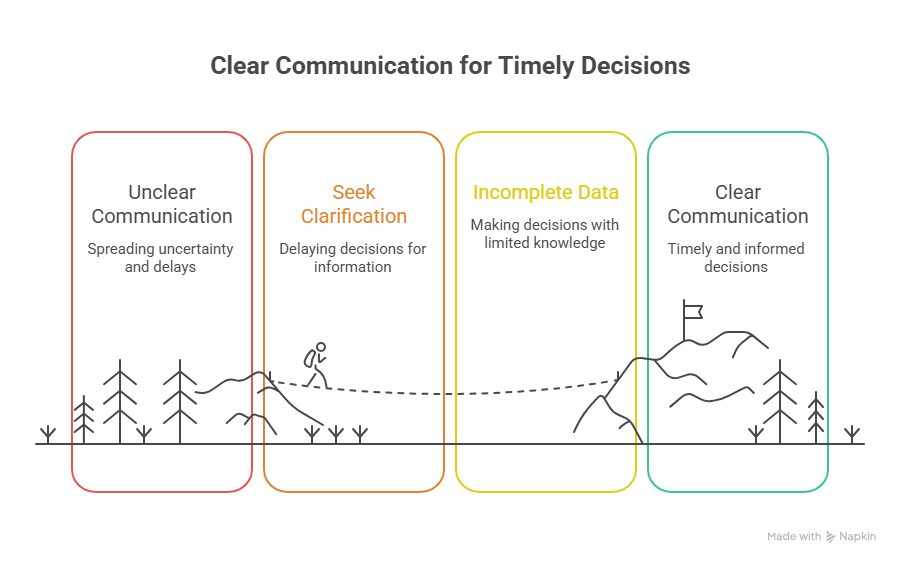
Before diving into solutions, let’s look at the cost of poor communication to your organization. Many companies don’t realize how much money they’re losing due to communication breakdowns.
Financial impacts include:
- Lost productivity: Employees spend up to 21% of their time dealing with communication issues.
- Project delays: Unclear instructions lead to rework and missed deadlines.
- Employee turnover: Poor communication is a top reason people quit their jobs.
- Customer dissatisfaction: Communication problems often reach clients and damage relationships.
- Safety issues: In certain industries, inadequate communication can lead to accidents and legal complications.
The emotional costs are just as significant. When communication breaks down, stress levels increase, morale drops, and team relationships suffer. People start avoiding each other, working in silos, and losing trust in their colleagues and managers.
Here are 6 proven strategies drawn from expert insights and real-world practices that deliver results in modern workplaces, including hybrid and remote settings.
1. Active Listening: The Foundation of All Communication
Most people think communication is about talking, but the most important skill is actually listening. Active listening forms the foundation of all effective organizational communication strategies.
What active listening really means:
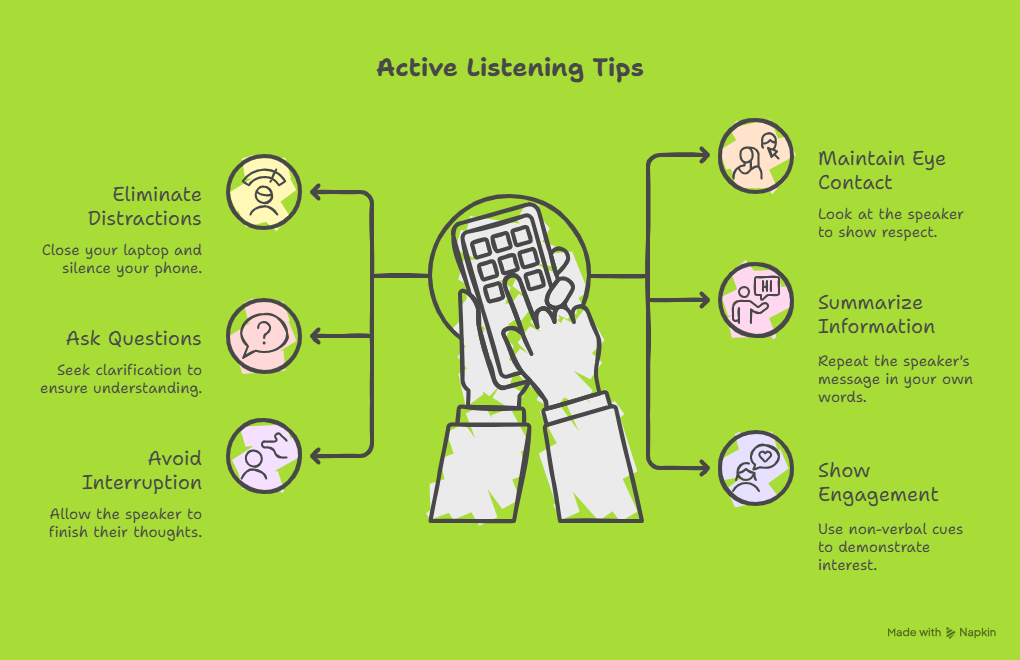
Active listening goes way beyond just hearing words. It involves paying full attention to the speaker, understanding their message, and responding thoughtfully. This skill takes practice, but it’s worth the effort.
How to practice active listening:
2. Clear and Concise Messaging
One of the most practical communication strategies in the workplace is learning to express yourself clearly. Many communication problems stem from messages that are too vague, too long, or too complicated.
The BRIEF method for clear communication:
- Brief: Keep messages concise while including all necessary details.
- Relevant: Include only information that matters to your audience.
- Informative: Provide specific details and context.
- Engaging: Use language that connects with your audience.
- Friendly: Maintain a positive, professional tone.
Writing clear emails:
Clear and detailed subject lines make your emails easier to understand and more engaging. Rather than using a generic subject like “Meeting,” try something specific, such as “Marketing budget review meeting, March 15 at 2:00 PM.” Begin your email with the key information right away. If your message is long, use bullet points or lists to help readers follow along. Be clear about what you want recipients to do or how you want them to respond.
Speaking clearly in meetings:
Speaking clearly helps people understand you at work and reduces confusion. To do this, use simple and precise words, skip jargon when you can, talk at a steady pace, and pronounce your words clearly.
3. Choosing the Right Communication Channel

Requests and Compliance
Research has found that people are much more likely to agree to help requests made in person than those made via text-based media, but that help-seekers underestimate the relative advantage of asking for help face-to-face.
Different types of messages require different communication methods. Part of improving communication in the workplace involves knowing when to use each channel.
Email works best for:
- Formal documentation.
- Non-urgent information sharing.
- Updates that need to be referenced later.
- Communication with external partners.
Instant messaging or chat works for:
- Quick questions with simple answers
- Informal team coordination
- Time-sensitive but not urgent matters
- Building team relationships
Phone calls or video calls work for:
- Complex discussions that need back-and-forth.
- Sensitive or emotional topics.
- Building relationships with new contacts.
- When tone and emotion matter.
In-person meetings work for:
- Important announcements.
- Brainstorming sessions.
- Team building activities.
- Difficult conversations that require full attention.
Face-to-face conversations work for:
- Performance discussions.
- Conflict resolution.
- Building trust and rapport.
- Delivering difficult news.
Creating guidelines for your team about which channel to use when can eliminate a lot of confusion and ensure important messages don’t get lost.
4. Pay Attention to Nonverbal Cues

Foot positioning reveals true intentions and comfort levels.
Pointing feet toward exits indicates a desire to leave, even when someone appears engaged in conversation. When feet angle away from a speaker during meetings, it suggests disagreement or discomfort despite nodding and verbal agreement. This unconscious positioning provides insight into authentic emotional states.
Your body language, tone of voice, and facial expressions communicate just as much as your words. Research suggests that 55% of communication is body language, 38% is tone of voice, and only 7% is the actual words you use.
Key non-verbal elements to pay attention to:
Body language:
- Maintain open posture (uncrossed arms, facing the person)
- Use appropriate hand gestures to emphasize points
- Keep good eye contact without staring
- Match your facial expressions to your message
Voice tone and pace:
- Speak at a moderate pace – not too fast or too slow.
- Vary your tone to keep people engaged.
- Lower your voice for serious topics.
- Use pauses effectively to emphasize important points.
Personal space and environment:
- Respect cultural differences in personal space.
- Choose appropriate settings for different types of conversations.
- Be aware of background noise and distractions.
- Position yourself at the same level when possible (both sitting or both standing).
Virtual communication considerations:
With more remote work, your on-camera presence matters more than ever:
- Position your camera at eye level.
- Ensure good lighting on your face.
- Choose a clean, professional background.
- Mute when not speaking to avoid background noise.
- Look at the camera when speaking, not the screen.
5. Building Feedback Culture
Regular feedback is one of the most important effective organizational communication strategies. When done well, feedback helps people grow, prevents small issues from becoming big problems, and creates a culture of continuous improvement.
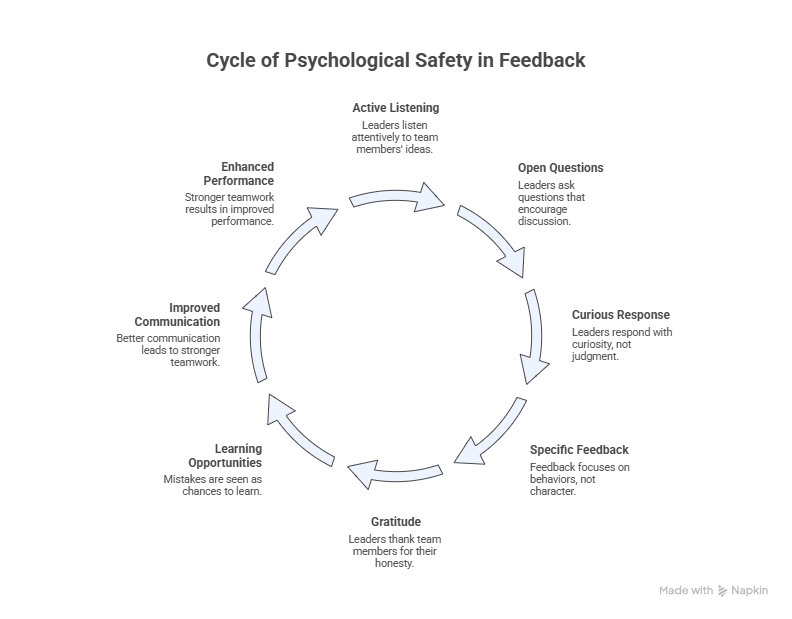
Giving effective feedback:
For positive feedback:
- Be specific about what they did well
- Explain the impact of their actions
- Give it as soon as possible after the event
- Make it personal and genuine
Example: “The way you handled that client complaint yesterday was excellent. You listened carefully, acknowledged their frustration, and found a creative solution. The client emailed me this morning to say how impressed they were with your service.”
For constructive feedback:
- Focus on specific behaviors, not personality
- Explain the impact on the team or project
- Offer suggestions for improvement
- Ask for their input on solutions
Example: “I noticed that you arrived 15 minutes late to the last three team meetings. This makes it difficult for the team to start on time and sometimes means you miss important context. Could we talk about what’s making it challenging to arrive on time and figure out a solution?”
Receiving feedback well:
- Listen without getting defensive
- Ask clarifying questions if you don’t understand
- Thank the person for taking time to help you improve
- Follow up later to show what you’ve done with their input
6. Measuring Communication Success
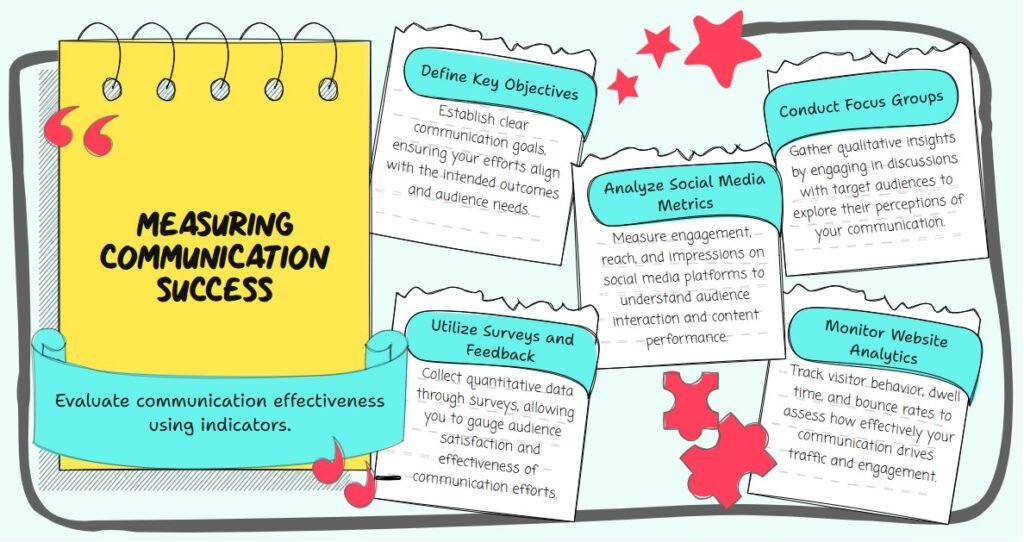
How do you know if your effective workplace communication strategies are actually working? You need to measure both quantitative and qualitative indicators.
Quantitative measures:
- Email response times: Are people responding to important emails more quickly?
- Meeting efficiency: Are meetings shorter and more productive?
- Project completion rates: Are teams finishing projects on time more often?
- Employee engagement scores: Do surveys show improved satisfaction with communication?
- Customer satisfaction: Are external communications improving client relationships?
Qualitative indicators:
- Reduced conflicts: Fewer interpersonal issues and misunderstandings.
- Better collaboration: Teams working together more smoothly across departments.
- Increased innovation: People feeling comfortable sharing new ideas.
- Higher morale: General sense that communication is improving workplace culture.
- Leadership feedback: Managers reporting easier conversations with their teams.
Regular communication audits:
Every six months, conduct a communication audit:
- Survey employees about communication effectiveness.
- Review common communication problems from the past period.
- Analyze which channels are being used most effectively.
- Identify training needs for specific communication skills.
- Update communication guidelines based on what you’ve learned.
Creating improvement plans:
Based on your measurement results:
- Prioritize the biggest problems: Focus on issues affecting the most people or causing the most disruption.
- Set specific goals: “Reduce email response time by 50%” is better than “improve communication”
- Assign responsibility: Make sure someone is accountable for each improvement effort.
- Track progress: Check in regularly to see if changes are making a difference.
- Celebrate successes: Recognize when communication improvements are working.
Action Steps You Can Take Today
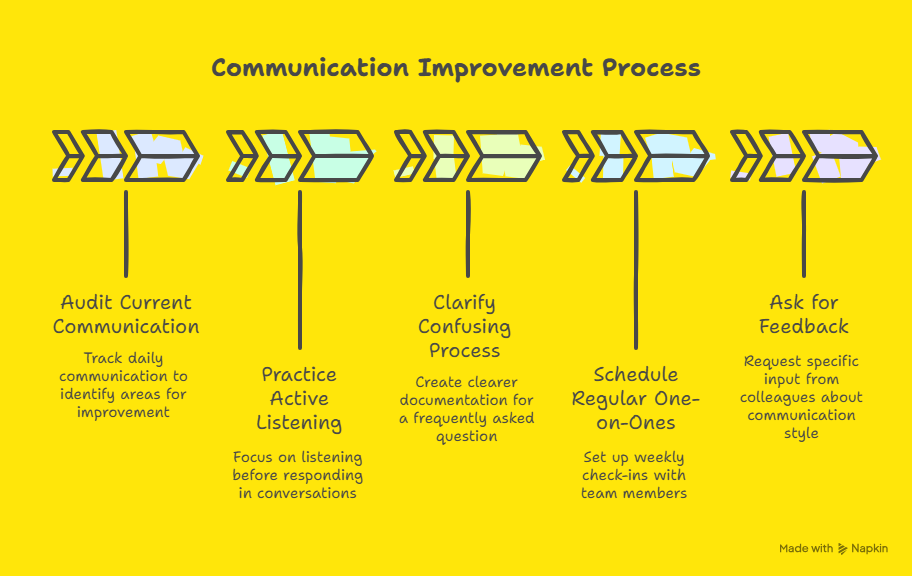
You can improve communication at work right away by following a few simple steps. Listen closely and ask questions if something is unclear. Speak in a clear and straightforward way. Show respect for others’ opinions. Give praise when it is deserved. Invite your coworkers to share their ideas to keep conversations open.
Making these changes can help everyone better understand one another, build trust, and work together more easily.
Conclusion
Remember, effective workplace communication strategies aren’t just about following rules or using the right tools. They’re about building genuine connections, understanding each other better, and creating an environment where everyone can do their best work. Start with small changes, be consistent, and you’ll see significant improvements in how your team works together.
The investment you make in better communication today will pay dividends in increased productivity, happier employees, and better business results for years to come. What communication challenge will you tackle first?