


How to Manage Your Time: 5 Tips to STAY FOCUSED

Transform how you manage your time with these amazing secrets. Discover proven methods to stay focused and eliminate distractions throughout your day.
The way a person spends his days is how he spends his life. That is why planning time
It is vitally essential for time management. Planning helps individuals stay organized
and focused. It helps individuals figure out which tasks are crucial and which are not. It
also serves as a road map for what you need to do and when.
Without a solid plan, individuals may do too many things at once or procrastinate.
Some people seem to have everything together. Chances are, they’ve taken the time to
learn to be productive. That means you can too.
How to Manage Your Time Effectively
Managing your time well is one of the most important skills you can learn in life. Start by making a simple list of everything you need to do each day, and put the most important tasks at the top. Set clear goals for yourself and break big jobs into smaller, easier steps so they don’t feel so scary. Try to do similar tasks together, like answering all your emails at once instead of checking them throughout the day. Learn to say no to things that waste your time or don’t really matter.
How Can You Manage Your Time and Stay Focused? Try These Tips:
1. Figure out where your time is currently spent.
This is the first step to managing your time and staying focused.
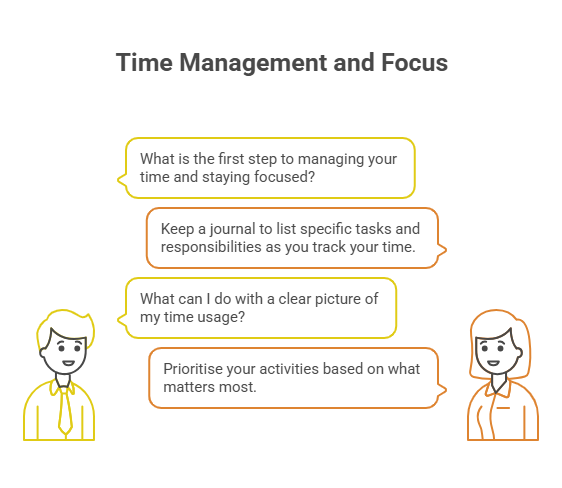
One way to do this is by keeping a journal. List out specific tasks and responsibilities as you track your time.
With a clear picture of your time usage from your journal, you can now prioritize your activities based on what matters most.
Get a free journal Planner from my Beacons store
2. Keep your goals in sight.
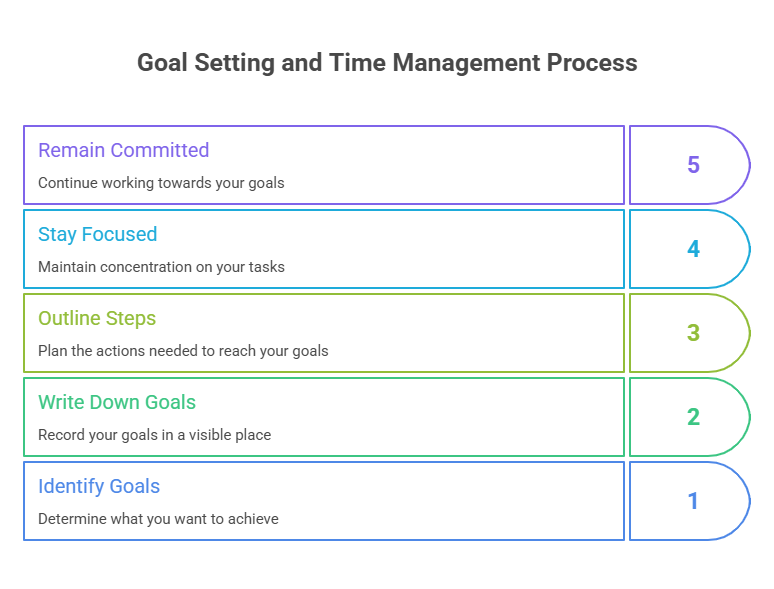
Goals are the foundation of time management. Without them, you are unlikely to accomplish anything or stay focused on your tasks. Setting goals is straightforward: start by writing them down and placing them somewhere visible every day. Afterwards, outline the steps necessary to achieve those goals. By setting your goals, you are more likely to stay on course and remain committed.
Goals establish measurable milestones
These milestones allow individuals to track their progress and make necessary adjustments along the way. Each milestone serves as a checkpoint, providing motivation and clarity on how far one has come and what still needs to be accomplished. Goal setting is the foundation of successful financial planning.
3. Create time blocks.
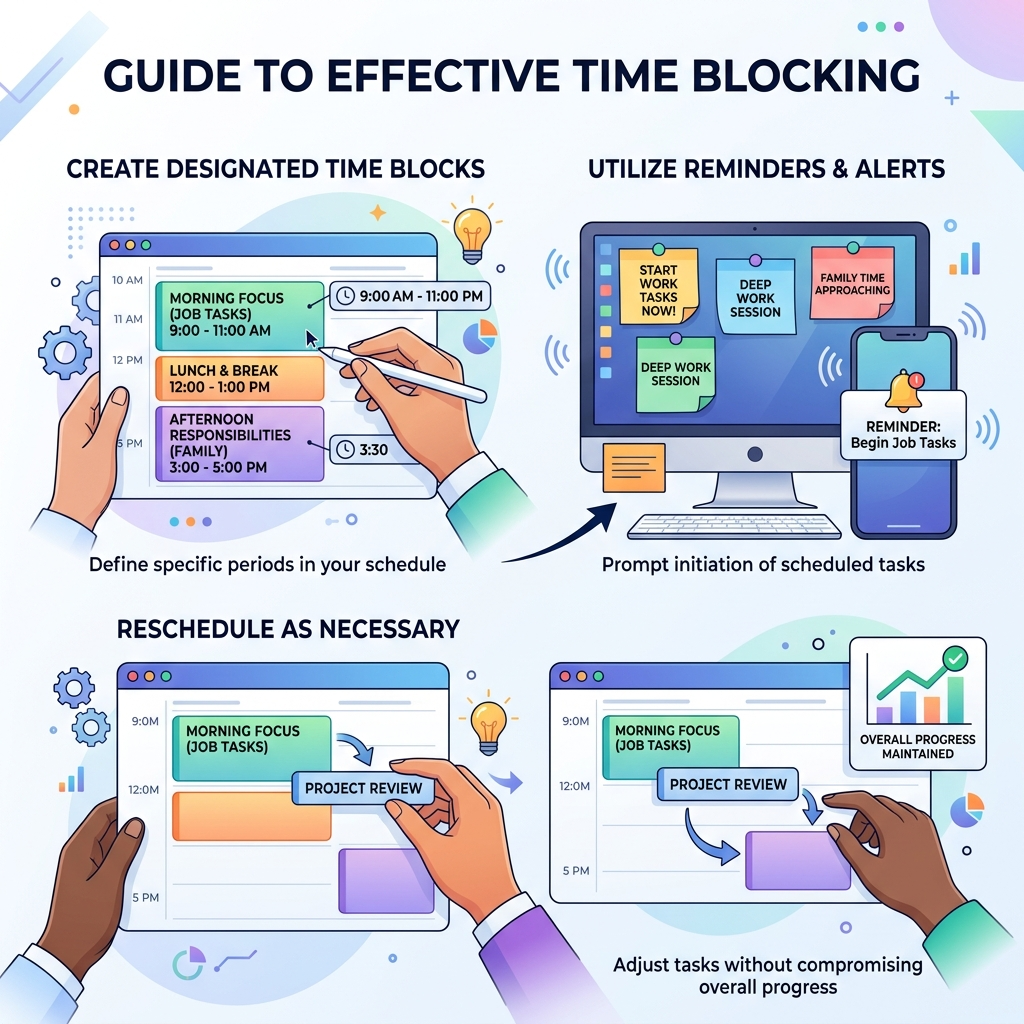
Allocating 15 minutes each day to schedule specific blocks of time for daily tasks can significantly improve productivity. This approach minimises distractions and promotes efficient time management.
4. Work on the most critical tasks first.
Many people procrastinate because they feel overwhelmed by the sheer number of tasks they have to complete every day. On the other hand, people who work on the most critical tasks first tend to get more done and feel less stressed.
By starting with the most important activities first, you’ll get the biggest payoff out of your time, which will make you feel more motivated to do it all. Of course, this doesn’t mean you should skip over those other tasks just because they’re less important. By picking your priorities wisely and working on the most critical tasks first, you improve your productivity and reduce your stress.
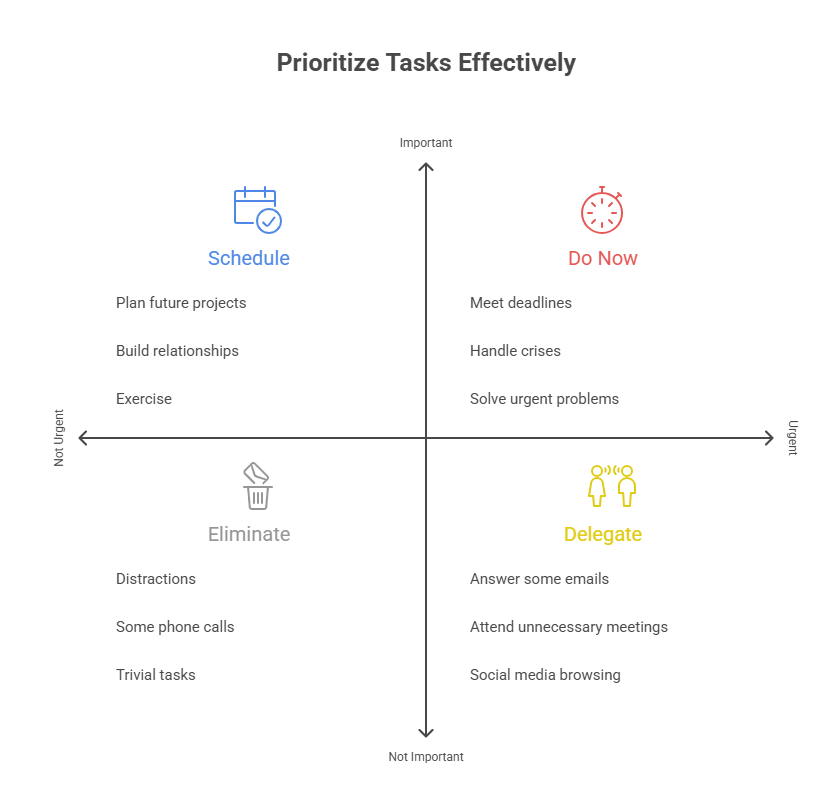
Eisenhower Matrix
The Eisenhower Matrix is a simple decision-making tool that helps you organize tasks based on two key factors: urgency and importance. Think of it as a sorting system for your to-do list that separates the truly important work from the noise that fills up your day.
5. Manage your time with a time audit.
The initial step involves assessing the time allocated to each task, including activities such as checking email, responding to customer requests, and writing reports.
Subsequently, it is important to ensure that a reasonable amount of time is dedicated to these activities. Unnecessary tasks should be eliminated. For instance, excessive time spent responding to emails should be avoided.
If prompt responses to emails are required, a system can be established to receive emails only at designated times. This approach allows prioritising important tasks during periods of peak effectiveness.
Effective time management is a critical skill that reduces stress and enhances productivity. Careful adjustments to the schedule should prioritise essential activities and minimise time spent on less significant tasks.
Conclusion
Mastering your time is not about filling every moment. It is about putting your energy into what matters most. When you use these five strategies, you move from just being busy to being more intentional.
Progress usually happens in small steps. Try using just one of these tips regularly, and you will soon notice that staying focused feels more natural and less like a struggle. Consistency connects your goals to your achievements, so keep working at it.
