


The Ultimate Guide to Setting BULLETPROOF Boundaries at Work for Better Mental Health

Master amazing boundaries at work that leave people thrilled and respectful. Get practical strategies for professional success and personal well-being.
The cost of ‘just five more minutes’ of work is higher than we realise. It steals time with family, weakens friendships, and erodes your mental space. If you feel overwhelmed by endless demands, the real issue is your ability to set boundaries. Your personal time is not optional—make it a non-negotiable right.
Setting boundaries at work isn’t a sign of weakness—it’s a way to safeguard your mental health, maintain your energy, and prevent burnout so you can consistently perform well. Boundaries act as barriers that protect your personal time, energy, and well-being from workplace demands.
Today, work and personal life overlap more than ever. Work notifications arrive during family dinners. Bosses expect immediate replies to midnight emails. Colleagues give you urgent tasks without warning. Without boundaries, work takes over, leaving you exhausted, stressed, and overwhelmed.
By the end of this guide, you’ll know the main reasons boundaries at work are vital, recognise key types of workplace boundaries, and understand effective steps for implementing them. You’ll take away straightforward strategies for communicating and maintaining your limits.
Understanding Why Workplace Boundaries Are CRUCIAL for Your Success
Workplace boundaries protect you from burnout, stress, and overwhelm. Like guardrails on a mountain road, they help you stay safe and navigate challenges. Without these barriers, you may work endless hours, take on others’ responsibilities, and become mentally and physically drained.
Many people think having no boundaries shows dedication or value at work. Yet research suggests otherwise. Employees with healthy boundaries are typically more productive, creative, and engaged. They make fewer mistakes and bring fresh ideas because they rest and recharge. Most importantly, they can sustain high performance without severe burnout.
Workplace boundaries benefit your personal life, too. Protecting personal time lets you invest in relationships, hobbies, exercise, and fulfilment. In turn, your personal life energises you at work, and your work satisfaction becomes less dependent on external validation.
Understanding Boundaries at Work for a Healthier Balance
Setting clear boundaries at work is essential for your mental health and happiness. Say no to extra tasks outside your role, stop checking emails after work, and take real lunch breaks. You must create space to recharge. Being available at all times does not prove your value; it drives burnout and poor performance.
TIME BOUNDARIES
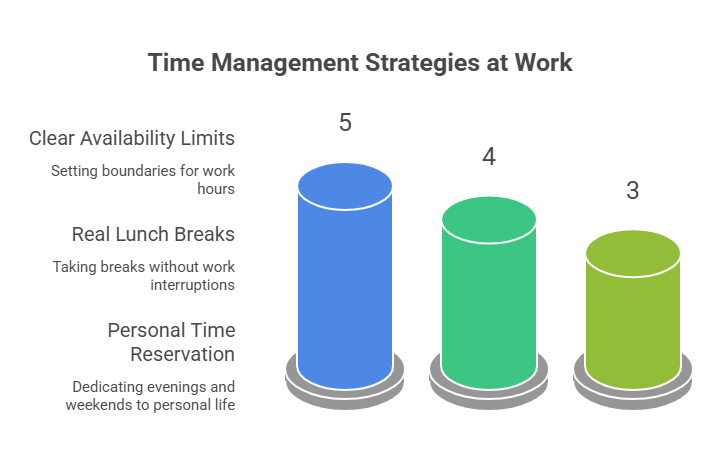
Time boundaries are essential at work. Set clear limits on when you’re available and when you’re off-limits. This might mean specific email hours, real lunch breaks without work, and weekends or evenings reserved only for personal time.
COMMUNICATION BOUNDARIES
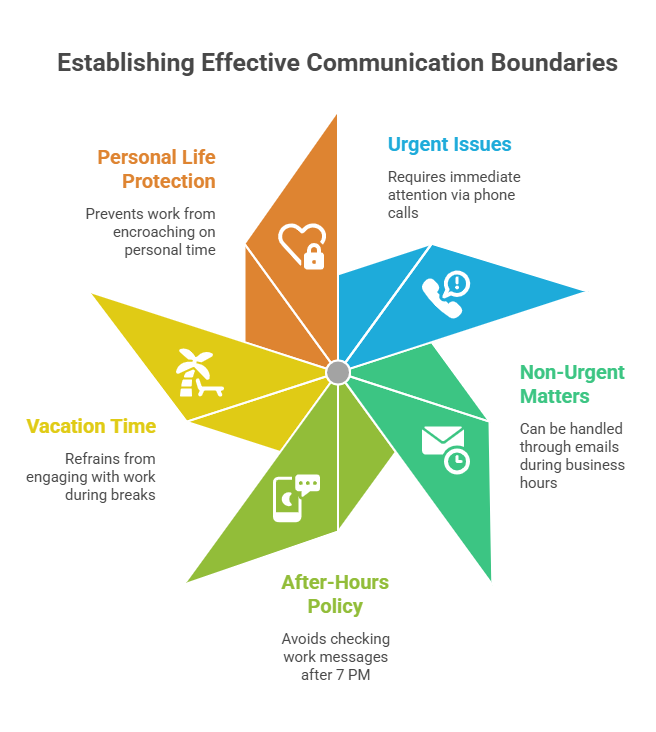
Communication boundaries help you manage how, when, & where people can contact you about work matters. Maybe you decide that urgent issues require a phone call, while non-urgent matters can wait for an email during business hours. Perhaps you choose not to check work messages after 7 PM or during your vacation time. These boundaries prevent work from invading every moment of your personal life through constant digital interruptions.
TASK AND RESPONSIBILITY BOUNDARIES
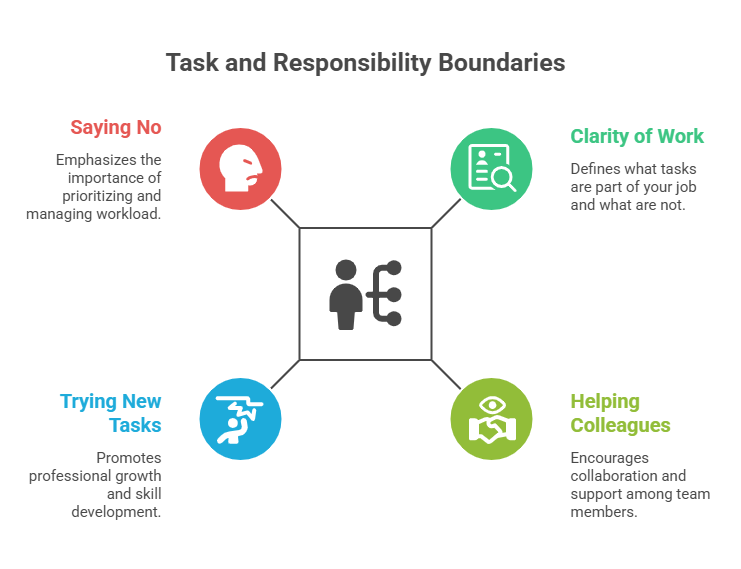
Task and responsibility boundaries clarify what your work is and what isn’t. You can still help colleagues or try new tasks, but you shouldn’t say yes to every request—especially those outside your job, or that disrupt your main duties.
EMOTIONAL BOUNDARIES
Emotional boundaries guard your well-being from workplace drama and negativity. Avoid office gossip, don’t absorb colleagues’ complaints, and don’t take responsibility for your boss’s mood. These boundaries keep your mindset positive and shield you from others’ stress.
PHYSICAL BOUNDARIES

Open Office Environments Require Compensatory Boundary Behaviours
In open offices, employees unconsciously create artificial boundaries to compensate for the lack of physical ones. They strategically place personal items, position their bodies purposefully, and wear headphones to signal “do not disturb.” Recognizing and respecting these makeshift boundaries maintains workplace harmony and productivity.
Physical boundaries involve your workspace, belongings, and comfort. Ask for privacy if needed, keep your desk organized for your needs, and speak up about temperature issues. Physical boundaries also include protecting your space from intrusion or unwelcome touch and ensuring comfort and safety.
Creating Your Personal BOUNDARY Framework Step by Step
STEP-1-(IDENTIFY BOUNDARY ISSUES)
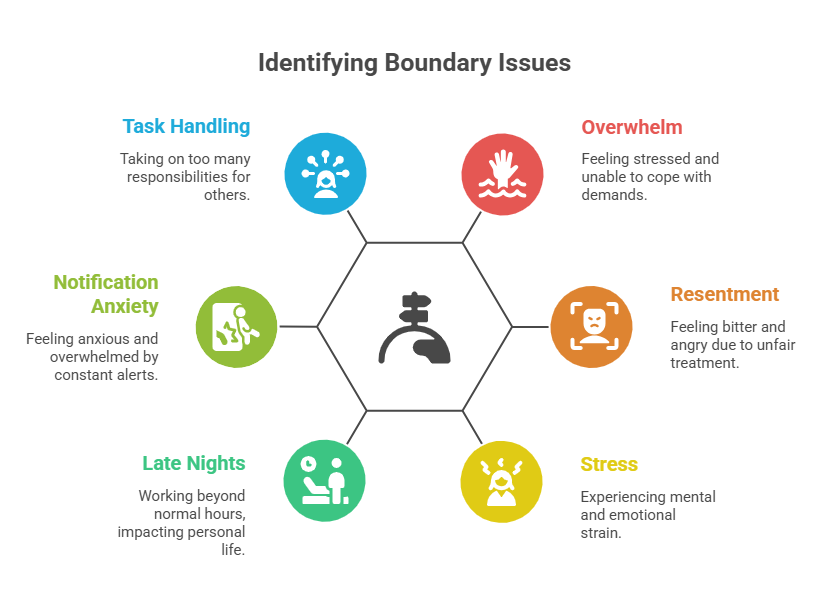
Start by honestly assessing where your boundaries are lacking. Note when you feel overwhelmed, resentful, or stressed. Are you working late every night? Do notifications make you anxious? Are you constantly handling tasks for others? Write down these situations to spot where boundaries are crossed or unclear.
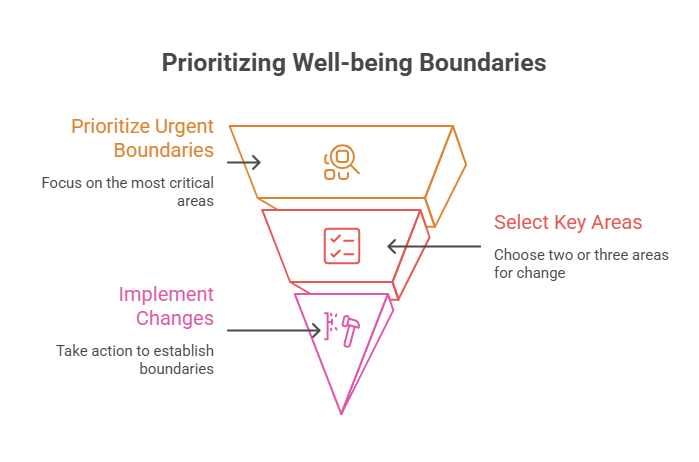
STEP-2-(PRIORITIZE MOST URGENT BOUNDARIES FOR YOUR WELL-BEING)
Next, prioritize the most urgent boundaries for your well-being and work effectiveness. Don’t try to fix everything at once; that usually fails. Pick two or three areas for the biggest positive change. If late-night emails exhaust you, prioritize setting time boundaries for communication first.
STEP-3-(DEFINE YOUR BOUNDARIES)
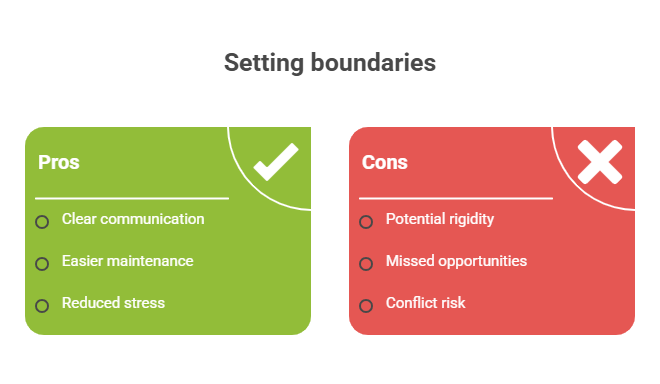
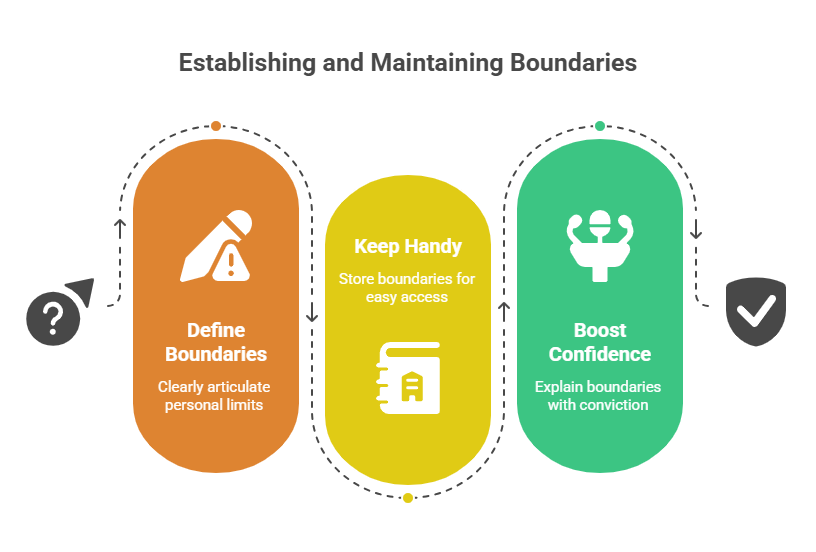
Once you have priorities, define your boundaries clearly. Vague boundaries—like ‘I won’t work too late’—are harder to hold than specific ones, such as ‘I won’t check work emails after 6 PM, unless it’s an emergency.’ Specific boundaries are easier to communicate and maintain.
STEP-4-(ESTABLISHING AND MAINTAIN BOUNDARIES)
Write down your boundaries and keep them handy. This helps you remember them in stressful moments and boosts your confidence when explaining them to others, since you’ve already thought them through.
STEP-5-(NAVIGATING BOUNDARY CHALLENGES)
Anticipate challenges or pushback when setting each boundary. Think about how you’ll respond if asked to stay late on Friday, or when a colleague assigns you urgent work before vacation. Preparing responses in advance helps you stick to your boundaries.
Communicating Your Boundaries EFFECTIVELY to Colleagues & Managers
How you communicate boundaries often determines success. Choose the right time and a calm setting. Avoid setting boundaries during a crisis or when emotions run high. Have these talks during calm moments to discuss expectations and working relationships.
Use confident, clear language focused on your needs and capabilities. Instead of ‘You always interrupt my lunch,’ try, ‘Taking an uninterrupted lunch helps me focus and be productive. I’ll step away from my desk from 12 to 1 PM each day.’ This shifts the message to positive benefits.
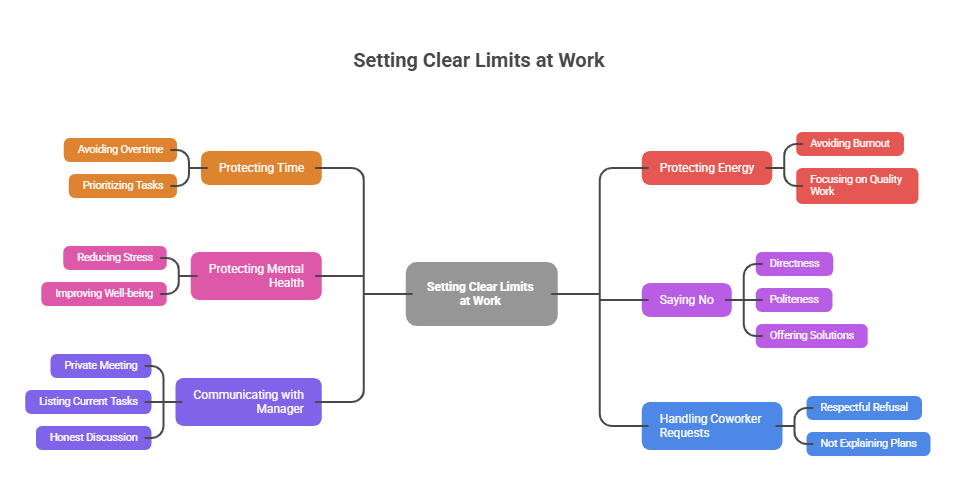
Remember that you might need to repeat or reinforce your boundaries multiple times before they’re fully respected. People are used to your old patterns, & it takes time for everyone to adjust to new expectations. Stay consistent & polite, but firm in your communication. Don’t abandon your boundaries the first time someone pushes back or tests them.
Handling Pushback & Maintaining Your Boundaries Long-Term
Expecting & preparing for pushback is crucial to your long-term success with workplace boundaries. Some colleagues or managers might test your resolve, try to make you feel guilty, or suggest that your boundaries make you less committed to your job. Remember that this pushback often says more about their own boundary issues than about your professionalism.
NAVIGATING BOUNDARY PUSHBACK
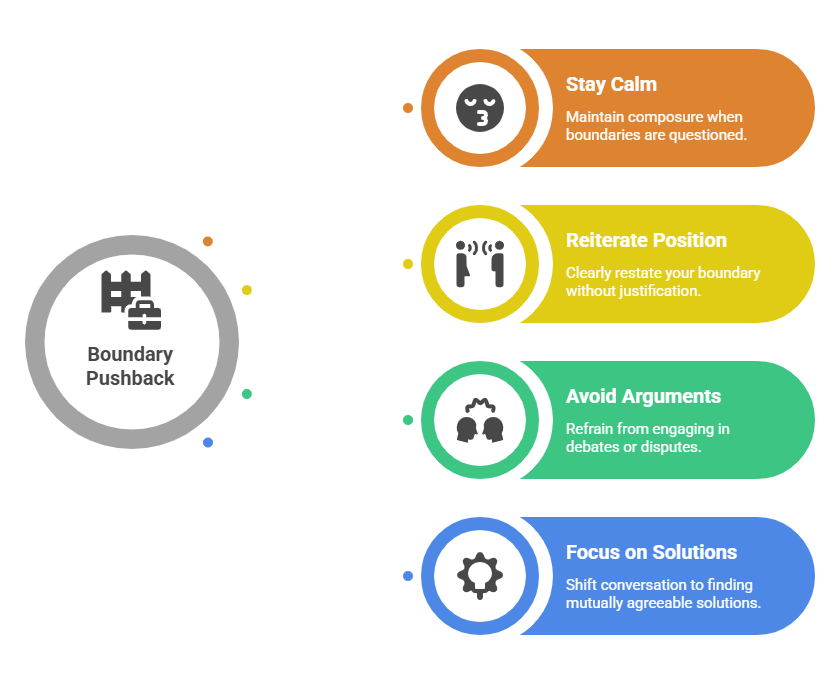
When someone pushes back against your boundaries, stay calm & reiterate your position without getting drawn into arguments or lengthy justifications. Keep bringing the conversation back to problem-solving rather than defending your right to have boundaries.
DOCUMENTING BOUNDARY VIOLATIONS
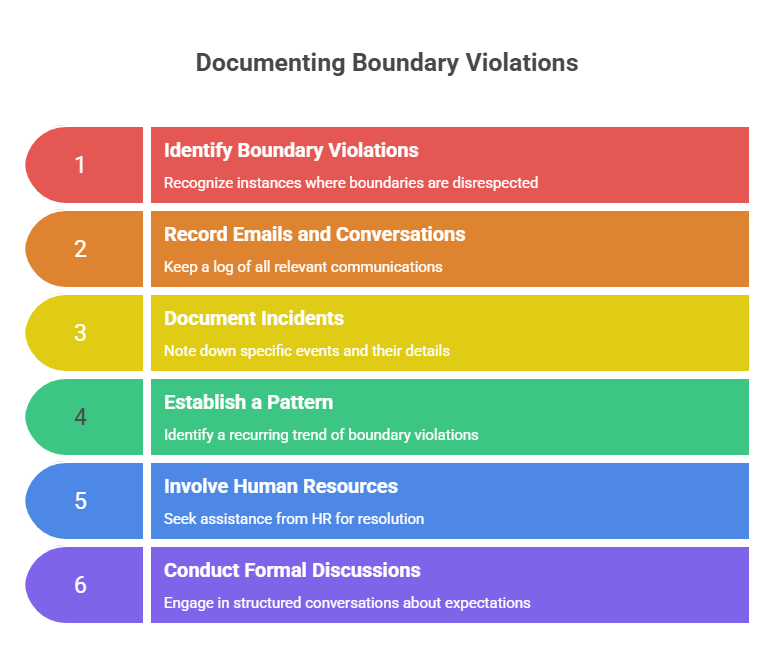
Document instances where your boundaries are repeatedly disrespected, especially if the pushback comes from supervisors or creates a hostile work environment. Keep records of emails, conversations, & incidents that show a pattern of boundary violations.
BUILDING A SUPPORTIVE WORK NETWORK
Build a support network of colleagues who respect & understand the importance of healthy boundaries. Having allies at work makes it easier to maintain your limits because you’re not fighting these battles completely alone. You might find that your commitment to boundaries actually inspires others to establish their own, creating a more positive work culture overall.
ADAPTING BOUNDARIES FOR SUCCESS
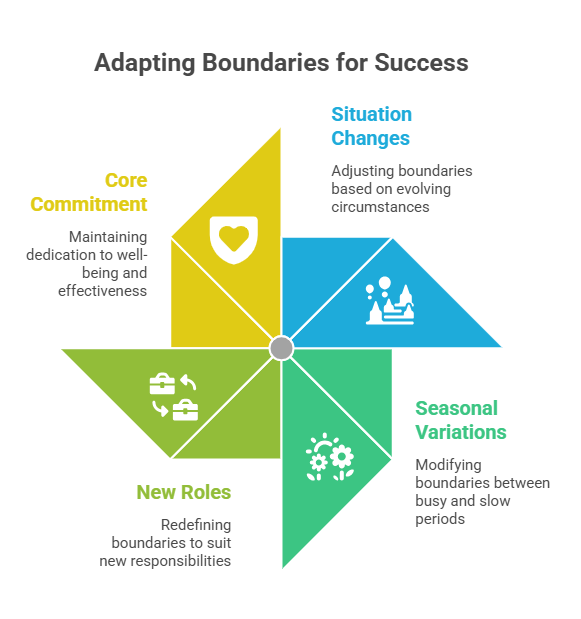
Regularly review & adjust your boundaries as your situation changes. What works during a slow period might need to be modified during busy seasons. New roles might require different types of boundaries. The key is staying flexible while maintaining your core commitment to protecting your well-being & professional effectiveness.
CONCLUSION
Creating & maintaining healthy boundaries at work isn’t selfish – it’s actually one of the most PROFESSIONAL things you can do for yourself, your colleagues, & your organization. When you’re well-rested, energized, & clear about your responsibilities, you bring your best self to work every day. You make better decisions, contribute more creatively, & build stronger working relationships with everyone around you.
Remember that establishing boundaries is a skill that improves with practice. You might feel awkward or uncertain at first, & that’s completely normal. Like any new habit, it takes time to feel natural & automatic. Start small, be consistent, & celebrate your progress along the way. Even small improvements in your boundary-setting can lead to significant improvements in your overall job satisfaction & life balance.
The framework we’ve outlined gives you a solid foundation, but your specific boundaries will be unique to your role, workplace culture, & personal needs. Trust yourself to know what feels right for your situation. You have the right to protect your time, energy, & well-being at work. Most importantly, you have the power to create positive change in your professional life starting right now.
Take action today by identifying just one boundary you’d like to establish this week. Write it down, think through how you’ll communicate it, & then take that first brave step toward a healthier, more sustainable relationship with your work. Your future self will thank you for having the courage to prioritize your well-being & create the professional life you truly deserve.
Learn more about Boundaries at work. Buy my book.”Framework for Setting
Boundaries at Work”