


5 Ultimate Ways to Help Elderly Parents Beat Depression

Discover 5 ultimate ways to help elderly parents beat depression and anxiety. Proven strategies that bring hope and lasting mental wellness to families.
Introduction
As parents get older, they face more health issues which can affect their body and mind further, and aging itself brings various physical and mental problems. As per medical studies, depression and anxiety are common mental health problems that create serious difficulties for elderly people regarding their daily life. We are seeing that when old parents are having problems with sadness or worry, there are only a few simple things we can do to help them.
Also, we are seeing that our parents are grown-ups only and we should behave nicely with them. We are seeing that it is easy to want to protect them too much or do everything for them, but this will only make the situation worse. Instead, talk with them about their problems and understand what help they need further, so the situation itself can be addressed properly.
We are seeing that spending time with parents is very important, even if it is only for a short time. We should meet our parents as much as possible. Spending good time with parents helps them feel more connected and reduces isolation further. This activity itself makes them feel less alone.
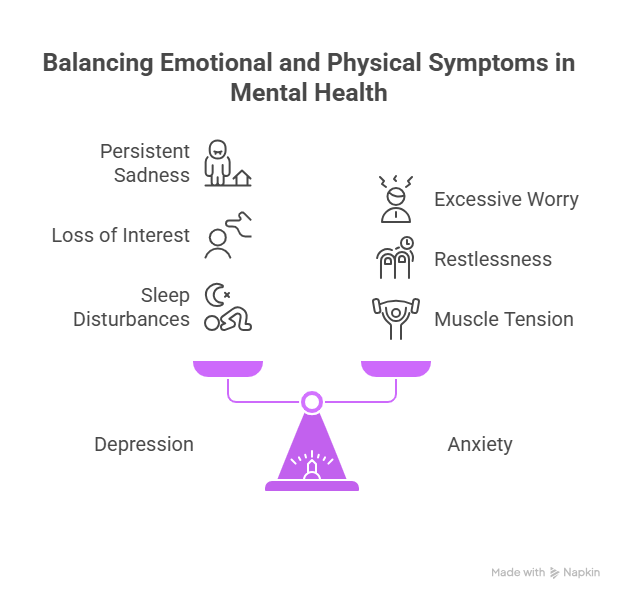
Here are five ideas for spending quality time with your parents. These activities can help you grow closer, build stronger family bonds, and make special memories together.
1. Cook a family recipe together
Pick a dish from your childhood or one your parents love, and make it as a team. While you cook, talk about where the recipe came from, who used to make it, and any funny kitchen stories. Cooking together often leads to good conversations and happy memories.
Cooking familiar recipes engages deeply embedded muscle memory, which remains intact even when other cognitive functions decline. The repetitive motions of kneading, chopping, or stirring activate neural pathways that can bypass areas affected by depression or anxiety.

Cooking and baking as a form of stress relief is now recommended for people dealing with a wide range of health conditions, including depression, anxiety, chronic stress, eating disorders, ADHD, and addiction
2. Take a leisurely walk or nature outing
Engage in a walk together in a local park, along the beach, or on a forest trail. When possible, leave electronic devices behind to facilitate conversation. Natural environments promote relaxation and support open discussions about life, aspirations, and memories.

Research shows that people who are more connected with nature are usually happier in life and more likely to report feeling their lives are worthwhile. Nature can generate many positive emotions, such as calmness, joy, and creativity and can facilitate concentration.
3. Make a family memory album or digital slideshow.
Look through old photos together, whether they are printed or on a computer. Talk about the memories behind each picture, add captions or stories, and compile them into an album or slideshow. This is a great way to celebrate your family’s history and create something you can all keep.

Looking through your photographs Activates Positive Memory Networks in the Brain
Photos can elevate our mood and diminish negative feelings. Seeing something beautiful, funny, cute, or important can make us happy by virtue of the qualities that appear in the image and by reviving the feelings we had when the picture was taken.
4. Play games you enjoyed as a child or try learning a new one together
Bring out the old board, card, or outdoor games you used to play. You can also teach your parents a new game. Playing together often leads to laughter, friendly competition, and fun moments.
Doing nostalgic activities, such as playing childhood games, can bring back good memories, lower blood pressure, reduce anxiety, and help with feelings of loneliness or depression that many older adults experience. Games also gently stimulate the mind, encourage laughter, and help people connect with others. These benefits can ease stress and even support brain health.
5. Foster Social Connections and Combat Isolation
Loneliness is a major trigger for depression in older adults. Help your parents stay engaged by arranging regular visits, phone calls, or outings. Encourage joining senior centers, clubs, or group activities. Even small interactions, such as volunteering or pet therapy, can significantly lift mood.

Volunteering reduces social isolation
According to a report from AARP, nearly two-thirds of volunteers who stayed engaged in a community service program for older adults called Senior Corps experienced reduced feelings of isolation.
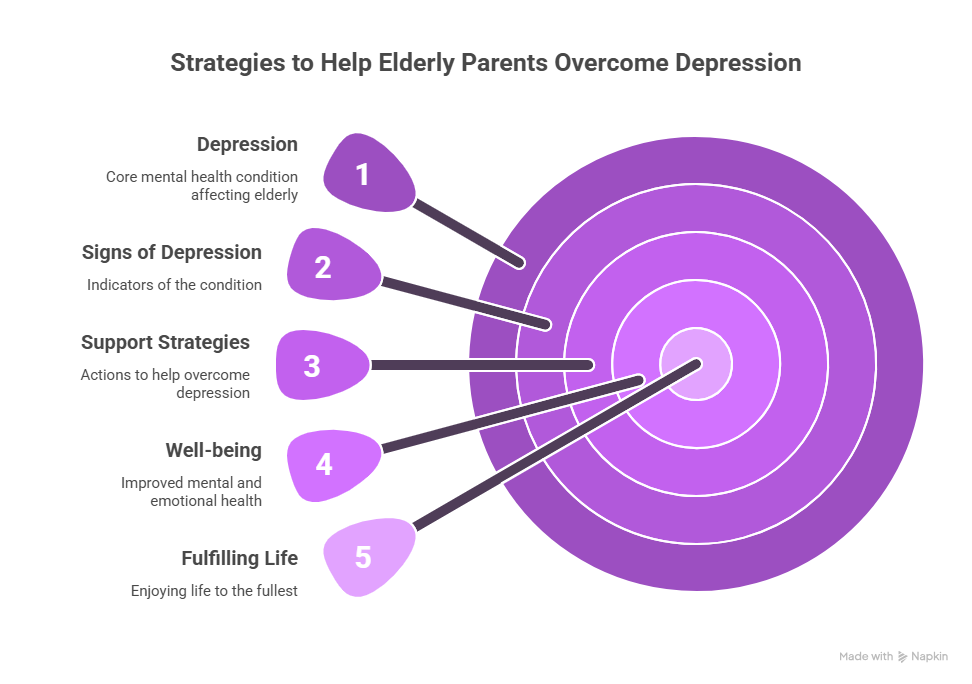
Strategies to Help Elderly Parents Beat Depression
Depression in elderly parents is a real concern, but families can make a difference with a few simple steps. Spending quality time with your parents—visiting them, calling often, or including them in family activities—can help ease their loneliness.
Encourage your parents to stay active with gentle activities like walking, gardening, or stretching, as these can lift their mood. Help them keep in touch with friends, join senior groups, or attend community events to meet new people. Make sure they eat well and get enough sleep, since poor habits can make depression worse. Listen to them without judgment, and let them express their feelings. If their depression is severe or not getting better, reach out to a doctor or counselor for help.
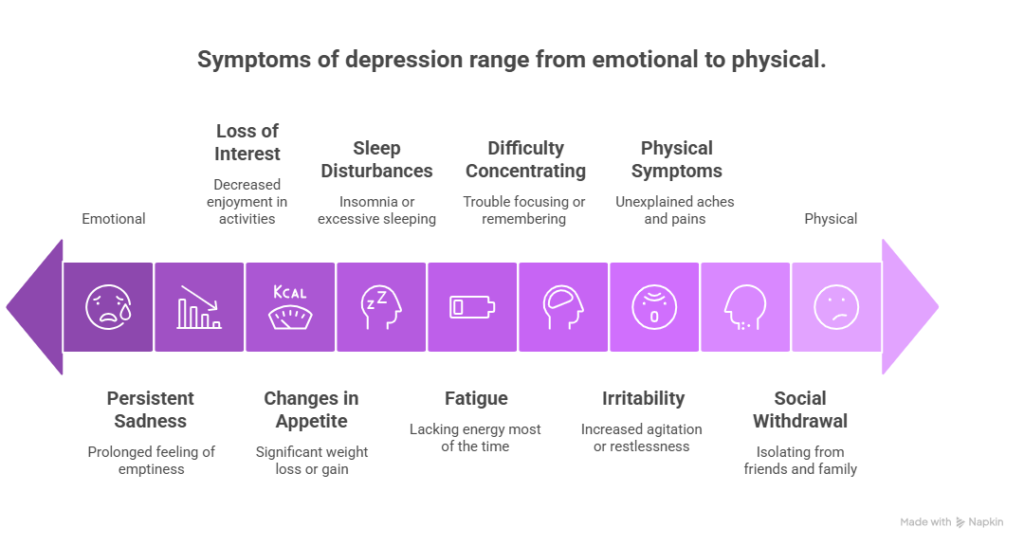
Symptoms of depression range from emotional to physical
Depression can show up in many ways, affecting both how people feel and their bodies. Someone with depression might feel sad, hopeless, or empty most of the time. They may stop enjoying things they once liked, such as playing sports, spending time with friends, or watching their favorite movies.
People with depression often feel tired all the time, even if they get enough sleep. They might have aches in their head, back, or stomach, even when no clear cause is apparent. Depression can also make people feel guilty, worthless, or like they are a burden to others.
It is important to remember that depression is a real illness that affects the whole person, not just their mood. With help from doctors, therapists, and support from family and friends, it can be treated.
Conclusion
Supporting elderly parents in overcoming depression represents a significant act of care and commitment during later life stages. Implementing five key strategies—fostering meaningful social connections, encouraging regular physical activity, promoting healthy nutrition and routines, providing attentive emotional support, and seeking professional assistance when necessary—can substantially improve their mental and emotional well-being.
Depression among older adults is prevalent, yet it is neither inevitable nor untreatable. With sustained patience, consistency, and compassion, many seniors demonstrate significant improvement, often regaining a sense of joy, purpose, and vitality. Active involvement not only alleviates symptoms but also reinforces interpersonal bonds and affirms social support.
